

A juvenile humpback whale has died after swimming about 11km upstream into Australia’s Clarence River, prompting authorities to issue a shark warning after the animal’s carcass was towed back out to sea.
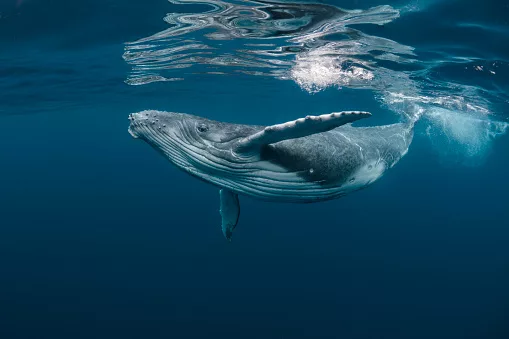
Image used for illustrative purposes/By: Craig Lambert/iStock
The unusual incident happened near Bundjalung National Park in New South Wales, where members of the public reported seeing the whale in the river on Saturday.
According to The Guardian, the whale was believed to be sick when it entered the river. It later became stranded on a sandbar in shallow water and died within about 30 minutes.
The carcass was towed out to sea on Sunday, while SharkSmart NSW warned people to avoid surfing, swimming and diving at nearby beaches because of increased shark activity.
Why did the whale enter the river?
Although humpback whales are marine animals, experts say it is not completely unheard of for them to enter rivers, estuaries and other unusual waterways.
Whale scientist Dr Vanessa Pirotta told The Guardian that such behaviour can happen because of curiosity or misadventure, while illness can also play a role.
The juvenile whale appeared to be in particularly poor condition, suggesting its health may have influenced its behaviour.
Humpbacks would also generally be heading south towards Antarctic feeding grounds at this time of year rather than moving into rivers.
According to the cetacean rescue organisation Orrca, the number of barnacles and other organisms on the whale’s skin could indicate a chronic illness, injury or another underlying health problem. However, the exact cause of death could not be determined from images alone.
ALSO READ:
Catatumbo Lightning: The Venezuelan lake where the sky can flash for hours
It is not the first whale to explore Australian rivers
While unusual, the Clarence River incident is not without precedent.
Earlier in 2026, another whale became stranded on a sandbar in Wallis Lake after swimming beneath the Forster-Tuncurry Bridge.
In 2025, two humpback whales were spotted travelling beneath Melbourne’s West Gate Bridge and into the mouth of the Yarra River.
One of Australia’s most unusual whale encounters occurred in 2020, when three humpbacks entered the East Alligator River in Kakadu National Park. One travelled about 30km upstream before the whales eventually returned to the sea.
Humpbacks can survive for a time in freshwater environments because they breathe air, but spending extended periods in freshwater may be harmful to their skin.
Why are sharks now a concern?
The presence of the dead whale has also raised concerns about shark activity along the nearby coastline.
Whale carcasses can attract scavengers, including sharks, as they provide a significant food source. Authorities therefore advised members of the public to follow local warnings and avoid entering the water near the area.
The warning comes shortly after another whale carcass attracted sharks at Perth’s City Beach in Western Australia. The Guardian reported that multiple sharks, including a large great white, were spotted near the carcass, prompting beach closures while authorities arranged its removal.
What should you do if you see a whale in distress?
Wildlife experts say people should avoid approaching or entering the water near a whale that appears sick, stranded or distressed.
Instead, unusual whale sightings should be reported to the relevant environmental or wildlife authorities so trained teams can assess the situation.
The Clarence River incident is a reminder that even during Australia’s annual humpback migration, whales can sometimes end up far from their expected route.
Source: The Guardian
Follow us on social media for more travel news, inspiration, and guides. You can also tag us to be featured.
Instagram | Facebook | Twitter | Spotify
ALSO READ: